
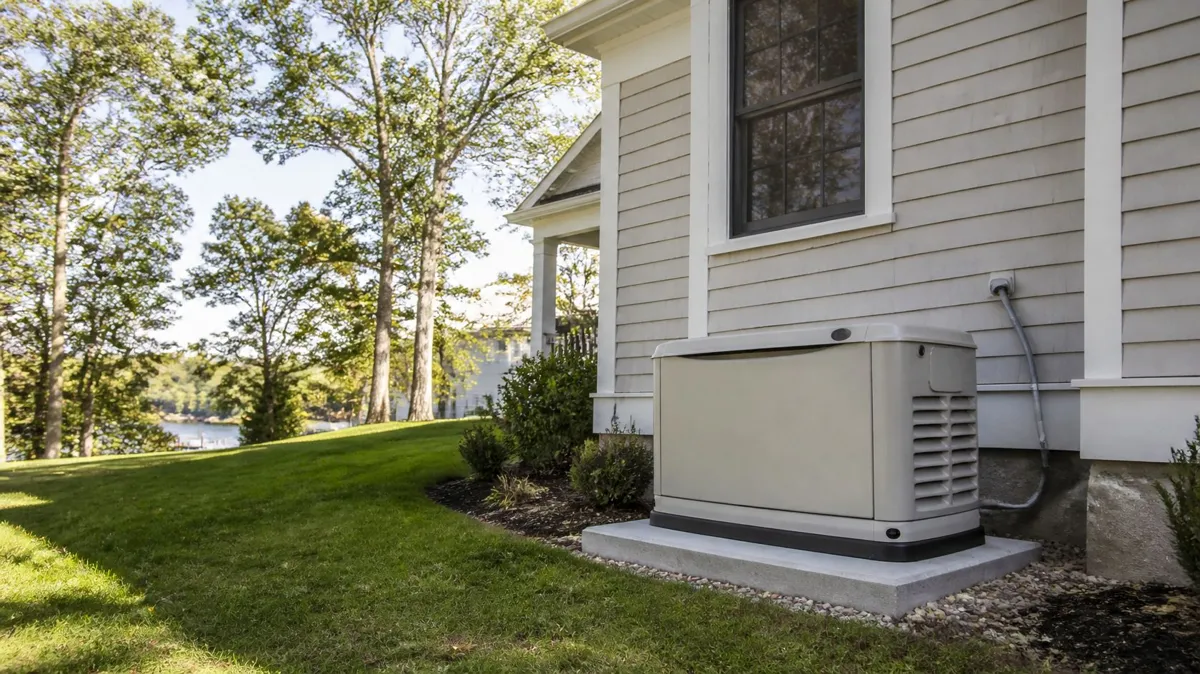
Quick answer: A whole-house standby generator on the South Shore needs a building permit plus electrical and gas permits, a spot at least five feet from windows, doors and combustible walls, and an automatic transfer switch wired into your panel. Boston Light & Power handles the electrical side, pulls the electrical permit and coordinates the gas connection and inspections. Most installs take one to three days on site once permits are approved.
When the power goes out in a nor'easter, the homes that stay warm are the ones that planned months ahead. Generator installs have more moving parts than most electrical jobs, because the town, the gas utility and sometimes your neighbors' windows all come into play. Here is how the process works so you know what to expect before you call.
If you are still deciding between a standby unit and a portable generator, or how big a unit you need, start with our post on Scituate storm outages and transfer switches. This post picks up once you have decided on a standby generator.
What permits does a generator installation need in Massachusetts?
Most South Shore towns treat a standby generator as three jobs in one:
- Building permit, often with a plot plan showing where the unit will sit
- Electrical permit, filed by the licensed electrician for the transfer switch and wiring
- Gas permit, filed by the licensed gas fitter for the fuel line
Some towns also want a fire department sign-off, especially for propane tanks. The exact forms vary from town to town, so we check with the building department in Milton, Quincy, Hingham, Cohasset, Scituate or wherever the house is before we schedule anything. The electrical work has to meet the Massachusetts Electrical Code.
Where can the generator go on my property?
Placement is where most installs get decided. Massachusetts building departments generally follow NFPA 37, the fire code standard for generators. A typical town checklist, like Marblehead's, says the unit must:
- Sit at least 5 feet from windows, doors, other openings and combustible material, unless the unit is listed for a closer install
- Keep its exhaust at least 10 feet from any forced-air intake
- Sit on a solid, level surface, above any flood area and away from sump and downspout discharge
- Not block the electric meter, gas meter or other utility equipment
- Have clear space around it, with no shrubs or landscaping crowding the air flow
On tight lots in Quincy and Milton, the 5-foot rule often decides the location. In coastal towns like Cohasset, Scituate and Hingham, flood zones and salt air matter too, so we look at elevation and how exposed the spot is before we pick it. Check the town's zoning setback from the property line as well.
What does the transfer switch do?
The automatic transfer switch is the brain of the system. It watches the power coming in from the utility. When the power drops, it starts the generator, disconnects your house from the utility lines and switches your circuits over to the generator. When utility power comes back, it switches back and lets the generator cool down and shut off.
The transfer switch also protects line crews. Without one, a generator can feed power back into the street wires. That is why a standby generator always goes in with a proper transfer switch, and why the wiring has to be done by a licensed electrician and inspected.
You can back up the whole house or only the circuits that matter most, like heat, the well pump, the sump pump, the fridge and a few lights. Whole-house coverage needs a bigger generator and a service-rated transfer switch.
How does the installation work, step by step?
- 1. Site visit. We look at your panel, your electrical service, where the gas meter or propane tank is, and possible spots for the unit.
- 2. Load review. We add up what you want to run during an outage so the generator and transfer switch are sized to match.
- 3. Permits. Building, electrical and gas permits are filed. Your installer handles this.
- 4. Pad and setting. The unit goes on a pad in the approved spot.
- 5. Electrical work. We install the transfer switch, run the wiring from the generator to the switch and panel, and connect the control wiring.
- 6. Gas connection. A licensed gas fitter runs the fuel line and connects it.
- 7. Inspections and startup. The town inspects, then the generator is started, tested under load and set up to run its weekly self-test.
If the house is still on 100 amp service or the panel has no room, a service upgrade may need to happen first or at the same time.
What drives the cost of a standby generator?
Every job is quoted after the site visit. The main factors are:
- Generator size. Covering a few essential circuits costs less than covering the whole house, central air included.
- Transfer switch type. A whole-house, service-rated switch costs more than a smaller essential-circuits switch.
- Distance. The farther the unit sits from the panel and the gas meter, the more wire, conduit and gas pipe the job needs.
- Fuel. Natural gas homes need a line from the meter. Propane homes need a tank sized for the generator.
- Panel condition. An old or full panel may need work before the transfer switch can go in.
- Site work. Slopes, ledge, flood elevation requirements and landscaping all add time.
How long does it take?
The on-site work is usually one to three days. The longer part is everything before it: permits, the gas utility's schedule, and generator availability. Fall is the busiest season for generator installs on the South Shore, so the earlier you start, the more likely you are to have it running before the worst winter storms.
Frequently asked questions
Electrical Emergency? We Answer 24/7.
Burning smell, sparking outlet, hot panel or sudden power loss? Boston Light & Power provides 24/7 emergency electrical service across Boston, Milton, Quincy, Braintree, Weymouth, Hingham, Scituate and Cohasset. Licensed electricians, every hour of every day.
Call (857) 855-7899 NowPlanning a generator before winter?
Boston Light & Power installs standby generators and transfer switches across the South Shore and handles the electrical permit, the inspection and the coordination with your gas fitter. Call (857) 855-7899 or contact us to set up a site visit.
Related pages
Boston Light & Power serves Boston, Milton, Quincy, Braintree, Weymouth, Hingham, Scituate, Cohasset, Hanover and Norwell. Massachusetts Master Electrician license 24281-A, fully insured, rated 5.0 on Google.