
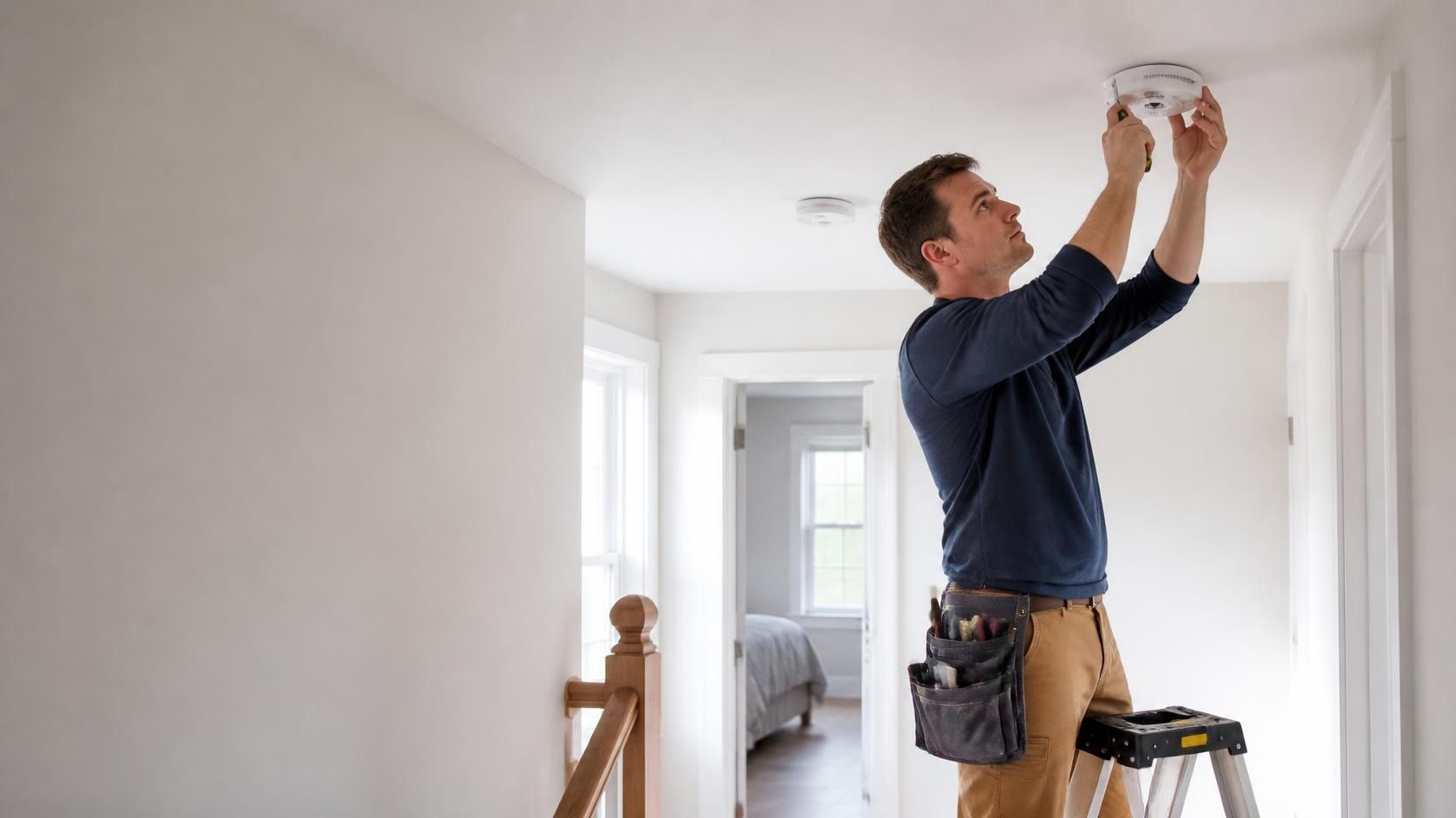
Detectors are the cheapest life safety equipment in a house and the most commonly wrong. Units past their service life, the wrong type near a kitchen, a level of the home with no coverage at all, or a battery unit chirping in a hallway because nobody wants to deal with it. None of that announces itself until it matters.
It also comes up when you sell. In Massachusetts, selling a one or two family home means the local fire department inspects the smoke and carbon monoxide alarms and issues a certificate before the closing. Buyers and closing attorneys will not move without it, and a failed inspection is one of the more avoidable ways a closing date slips.
We install and replace hardwired, interconnected detectors so every alarm in the house sounds together, and we place them where the requirements actually put them rather than where the old ones happened to be.
What we handle
- Hardwired, interconnected smoke and carbon monoxide alarms on every level
- Replacing units that have reached the end of their service life
- Photoelectric alarms in the areas near kitchens and bathrooms where they are required
- Combination smoke and carbon monoxide units where they make sense
- Getting a home ready for the fire department inspection before a sale
- Chirping, false alarms and units that will not quiet down after a battery change
- Alarms tied into a monitored system
Selling a home: what the inspection looks at
The fire department is checking type, placement, age and whether the alarms work. Detectors carry a manufacture date and a limited service life, so a unit that beeps when you press the button can still fail on age alone. Placement matters too, with coverage required on every level and near sleeping areas, and carbon monoxide protection required within a set distance of bedrooms.
The specifics vary with the age of the house and whether it has been substantially renovated, and your local fire department is the final word. The practical move is to have the alarms looked at a few weeks before the inspection instead of the week of the closing.
Why hardwired and interconnected matters
A battery alarm in the basement going off at two in the morning does not reliably wake someone on the second floor. Interconnected alarms all sound at once anywhere in the house, which is the entire point. Hardwired units with battery backup also end the slow failure mode where someone pulls a battery to stop a chirp and never puts it back. Older homes with knob-and-tube or ungrounded wiring often need whole-home rewiring before hardwired alarms can be run properly.
Frequently asked questions
Serving the South Shore
Boston Light & Power serves Boston, Milton, Quincy, Braintree, Weymouth, Hingham, Scituate, Cohasset, Hanover, and Norwell. We are licensed under Massachusetts Master Electrician License #24281-A.
Electrical Emergency? We Answer 24/7.
Burning smell, sparking outlet, hot panel or sudden power loss? Boston Light & Power provides 24/7 emergency electrical service across Boston, Milton, Quincy, Braintree, Weymouth, Hingham, Scituate and Cohasset. Licensed electricians, every hour of every day.
Call (857) 855-7899 NowServing the South Shore
Boston Light & Power serves Boston, Milton, Quincy, Braintree, Weymouth, Hingham, Scituate, Cohasset, Hanover, Norwell and the surrounding South Shore towns. Master Electrician license 24281-A, fully insured, and rated 5.0 across 85 Google reviews.
Selling, or just overdue?
We will get your smoke and carbon monoxide alarms current, correct and interconnected. Call (857) 855-7899.
Related reading and service areas
Ready to get it done? Let's talk.
Free quotes, straight answers, real people. Send a quick message or give us a call. Takes about 30 seconds, no pressure and no obligation.
Call (857) 855-7899