
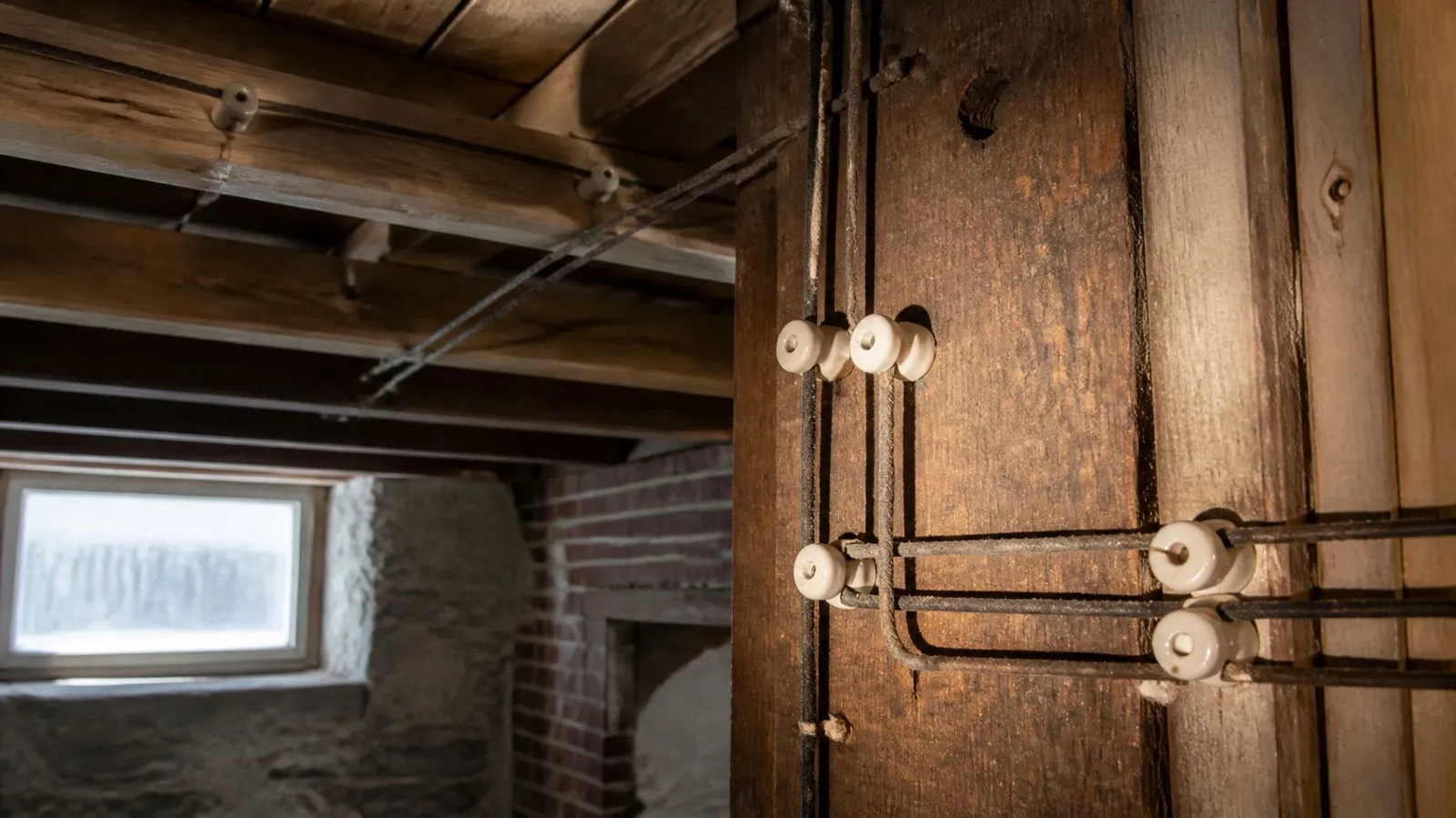
Quick answer: Knob and tube wiring is the original electrical system in many Massachusetts homes built before the 1940s. It is not automatically illegal, but most insurers ask about it, many buyers' lenders flag it, and Mass Save will not blow insulation over it while it is still live. Boston Light & Power, a licensed electrician based in Milton, inspects it, tells you which circuits are still active, and replaces them in stages so the house stays livable.
A lot of the calls we get about knob and tube start with a deadline. An insurance renewal letter asks about the wiring. A home inspector writes it up a week before closing. An energy auditor says the attic cannot be insulated until an electrician signs off. In each case the question is the same: how much of this old wiring is still in use, and what has to happen to fix it?
How common is knob and tube wiring around Boston?
Very common, because the housing is old. According to Housing.ma, about 54% of housing units in Boston are in buildings built before 1939. In Milton it is 47%, and in Quincy it is 41%. Knob and tube was the standard way to wire a house until roughly the 1940s, so a large share of these homes were built with it.
Many have been partly rewired over the years. That is what makes it tricky. A kitchen remodel in 1985 may have replaced the wiring in one room while the bedroom circuits upstairs still run on the original knobs and tubes inside the walls.
Is knob and tube wiring illegal in Massachusetts?
No. Existing knob and tube wiring can stay in service in Massachusetts. Electricians cannot install new knob and tube, and the Massachusetts Electrical Code, which is based on the National Electrical Code, limits where the existing wiring can be used.
The most important limit is insulation. The code does not allow concealed knob and tube in hollow walls, ceilings or attics that are insulated with loose, rolled or foamed-in-place insulation that wraps around the wires. Knob and tube was designed to shed heat into open air. When insulation covers it, the wire can run hot.
The other common problems we find have nothing to do with the original install:
- Brittle cloth and rubber insulation that cracks when the wire is moved
- No ground wire, so three-prong outlets were added without a real ground
- Splices added later by someone who was not an electrician
- Circuits that were fine for a few lamps now feeding space heaters, microwaves and window AC units
Will my homeowners insurance cover a house with knob and tube?
It depends on the carrier and on whether the wiring is still active. Some insurers ask for a letter from a licensed electrician describing the system. Some will write the policy with a condition that the active knob and tube be removed within a set time. Some decline the house until it is replaced.
If no standard carrier will write the policy, Massachusetts has a fallback: the Massachusetts FAIR Plan, run by the Massachusetts Property Insurance Underwriting Association. Coverage there is more basic and usually costs more, so most owners use it as a bridge while the rewiring gets done.
An electrician's written assessment helps in every one of these cases. It tells the insurer exactly how much knob and tube is left, where it is, and whether any of it is live.
Can I sell a house that still has knob and tube?
Yes. There is no Massachusetts rule that forces you to remove it before a sale. In practice, though, the buyer's home inspector will usually note it, and the buyer's insurer will ask the same questions yours did. That can lead to a price credit, a repair request, or a delayed closing.
If you are planning to sell in the next year or two, it is worth getting an assessment first. You will know what you are dealing with before a buyer's inspector tells you, and you can decide whether to rewire or price it in.
Why won't Mass Save insulate my attic?
Mass Save's home energy program requires a licensed electrician to verify that there is no active knob and tube wiring in the areas where insulation will be installed. Even when the visible wiring in the attic looks dead, there may still be live circuits inside the walls, so the auditor cannot sign off on their own.
When we do this kind of visit, we test each run, disconnect the dead sections, and replace any live circuits that pass through the area to be insulated. Then we give you the paperwork the program asks for so the insulation crew can schedule the job.
What does a knob and tube rewire involve?
- 1. Assessment. We trace which circuits are still knob and tube, which are live, and how the panel is set up. You get a written summary.
- 2. Plan by priority. Live circuits in insulated spaces and anything feeding high-draw appliances come first. Lighting circuits in open basements can often wait.
- 3. Permit. Rewiring is permitted electrical work. We file with your town, whether that is Boston, Milton, Quincy or Braintree.
- 4. New wiring. We fish new cable through existing walls wherever we can, using small access holes rather than opening whole walls. Older plaster homes take more care, and we plan around trim, built-ins and finished floors.
- 5. Panel check. Many knob and tube homes still have an old fuse box or a small panel. If the house needs more capacity, we look at a [panel upgrade](/services/panel-upgrades) at the same time so the new circuits have somewhere to land.
- 6. Inspection. The town wiring inspector checks the work before walls are patched.
You do not have to rewire the whole house at once. Many owners do it floor by floor or start with the circuits the insurer or Mass Save cares about. Our whole-home rewiring page explains how we stage the work, and our post on knob and tube wiring in Hingham walks through a typical pre-1960 house.
What does it cost to replace knob and tube?
Every house is quoted after the assessment. The biggest factors are how many circuits are still active, how easy it is to reach the walls from the attic and basement, plaster versus drywall, whether the panel needs to be replaced, and how much patching you want included. A partial job that only replaces the live circuits in the attic costs far less than a full rewire of a three-story house.
Frequently asked questions
Electrical Emergency? We Answer 24/7.
Burning smell, sparking outlet, hot panel or sudden power loss? Boston Light & Power provides 24/7 emergency electrical service across Boston, Milton, Quincy, Braintree, Weymouth, Hingham, Scituate and Cohasset. Licensed electricians, every hour of every day.
Call (857) 855-7899 NowGet your knob and tube wiring assessed
Boston Light & Power inspects and replaces knob and tube wiring in older homes across Boston, Milton, Quincy and Braintree, and we can give you the written assessment your insurer or Mass Save asks for. Call (857) 855-7899 or contact us to book a visit.
Related pages
Boston Light & Power serves Boston, Milton, Quincy, Braintree, Weymouth, Hingham, Scituate, Cohasset, Hanover and Norwell. Massachusetts Master Electrician license 24281-A, fully insured, rated 5.0 on Google.