More driveways on the South Shore have an EV in them every month. We recently wired a Level 2 charger for a brand new Rivian, and the questions that homeowner had are the same ones we hear on nearly every EV job: what kind of charger do I need, can my house handle it, where should it go, and what will it cost. This guide walks through all of it so you know what to expect before you buy a charger or book an install.
Level 1 vs Level 2
Level 1 is the cord that comes with the car plugged into a standard wall outlet. It adds a few miles of range per hour, which is fine for a plug-in hybrid or very light driving, and painfully slow for a full EV. Level 2 runs on a 240 volt circuit, the same kind your dryer uses, and charges four to ten times faster. For most EV owners, Level 2 is the one worth installing, because it means you plug in overnight and wake up to a full battery every morning.
There is also public DC fast charging, but that is not something you install at home. For daily home charging, the real decision is simply Level 2, and then which unit and where to put it.
Can your panel handle it?
This is the first thing we check, and it is where a lot of EV projects turn out to be bigger than the homeowner expected. A Level 2 charger can draw as much power as a whole kitchen. If your panel is already full or you are on a 100 amp service, adding a charger may push you over capacity.
Sometimes there is room and it is a clean, straightforward add. Other times a service upgrade makes sense first, especially if you are also thinking about a heat pump or an addition. If your panel itself is outdated, a panel upgrade can be done at the same time. We assess the panel before we quote so there are no surprises halfway through the job.
Where the charger goes
Location matters more than people expect. The closer the charger is to the panel, the less wire and conduit we run, which keeps the cost down. Garage installs are usually the cleanest and cheapest. Outdoor installs and detached garages are very doable, they just take a bit more planning for the wire run and weatherproofing. We look at where you park, where your panel is, and how you want to route the cable, then give you options at different price points.
Does the brand of charger matter?
The car and the charger need to match on connector type and amperage, but most quality Level 2 units do the same core job. If you drive a Tesla, we can install the Tesla Wall Connector or a universal unit with an adapter. If you drive a Rivian, Ford, Hyundai, or anything else, we size the circuit to the charger and the vehicle. Tell us the vehicle and we will make sure the circuit and the unit are right for it. If you have not bought a charger yet, we can recommend one that fits your car and your parking setup.
Permits and rebates
EV charger installs need a permit and an inspection, which we handle as part of the job. Massachusetts and several utilities have offered rebates on chargers and the electrical work behind them, sometimes worth several hundred dollars. Those programs change over time, so we will point you to what is current when we quote your job rather than promising a specific amount. It is always worth checking before you buy, because the rebate can influence which charger makes the most sense.
What a clean install looks like
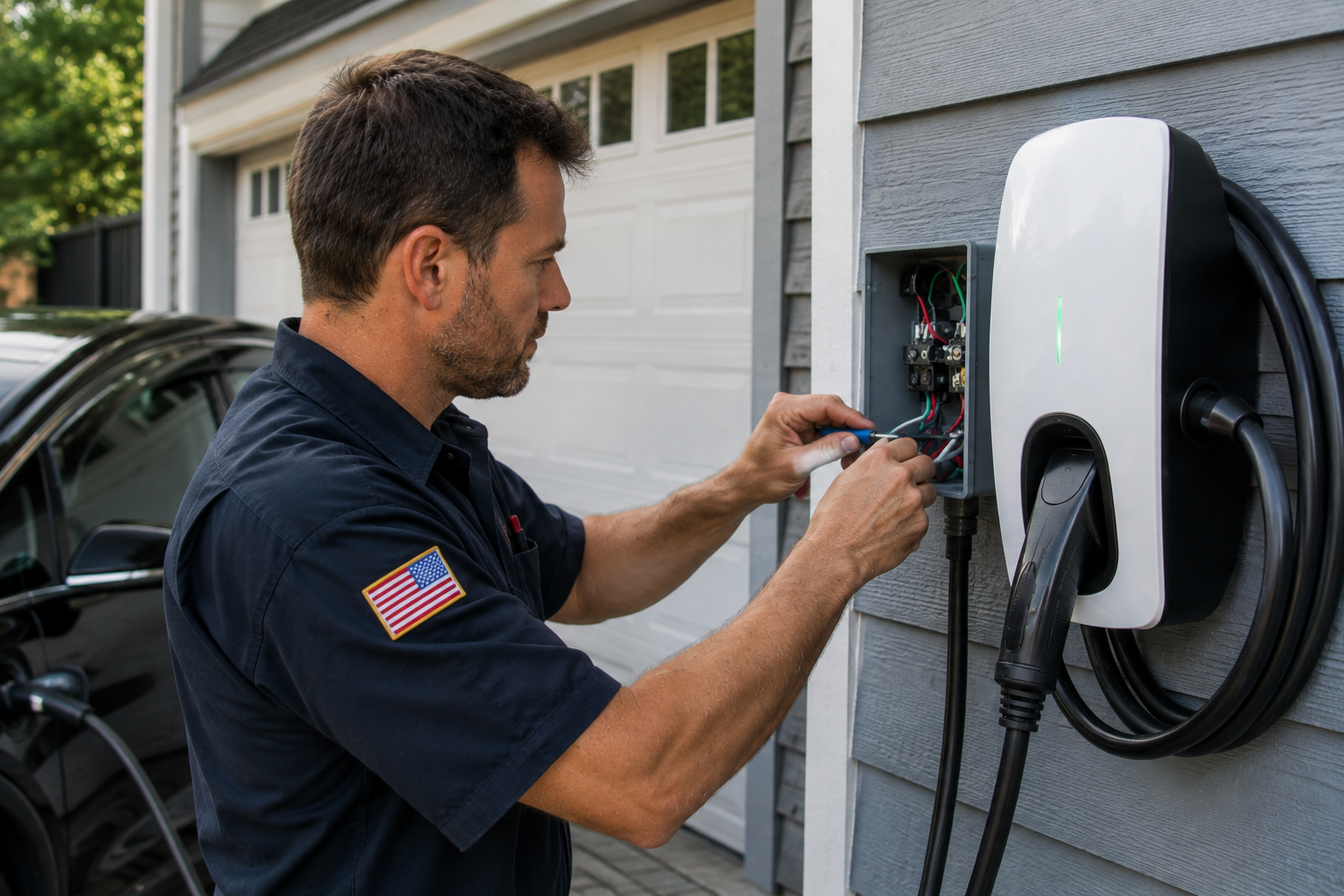
A good EV charger install is one you stop noticing after a week. The cable reaches your parking spot without stretching, the unit sits at a comfortable height, the conduit runs cleanly along the wall instead of across the middle of it, and the breaker is properly labeled in your panel. We also make sure the circuit is sized for the charger you actually have, not throttled down to fit a panel that was already too full. Done right, home charging becomes the easiest part of owning an EV: you plug in at night and never think about range around town again.
Ready to install a Level 2 charger at your South Shore home? See our EV charger installation service page for a full breakdown of pricing, permits, and what the job looks like.
Boston Light & Power serves Boston, Milton, Quincy, Braintree, Weymouth, Hingham, Scituate, Cohasset, Hanover, and Norwell. We are licensed under Massachusetts Master Electrician License #24281-A.
Frequently asked questions
Electrical Emergency? We Answer 24/7.
Burning smell, sparking outlet, hot panel or sudden power loss? Boston Light & Power provides 24/7 emergency electrical service across Boston, Milton, Quincy, Braintree, Weymouth, Hingham, Scituate and Cohasset. Licensed electricians, every hour of every day.
Call (857) 855-7899 NowReady to charge at home?
Tell us your vehicle and where you park. We will check your panel, size the circuit, and give you a firm quote.
Related pages
This article is general information. Rebate and permit details change over time, so confirm current programs before you buy.